

AI is useful only when it improves real business numbers. That is the main idea behind this blog post. An AI-driven ERP system connects business data, daily workflows, automation, and analytics so teams can make better decisions faster. It does not replace good management. It gives managers clearer signals before problems become expensive.
For example, McKinsey reports that AI can reduce inventory by 20% to 30%, cut logistics costs by 5% to 20%, and reduce procurement spend by 5% to 15% in distribution operations. Deloitte’s 2025 smart manufacturing survey also found average gains of 10% to 20% in production output and 7% to 20% in employee productivity from smart manufacturing initiatives.
Quick view: 10 Operational Metrics AI-Driven ERP Systems Can Improve
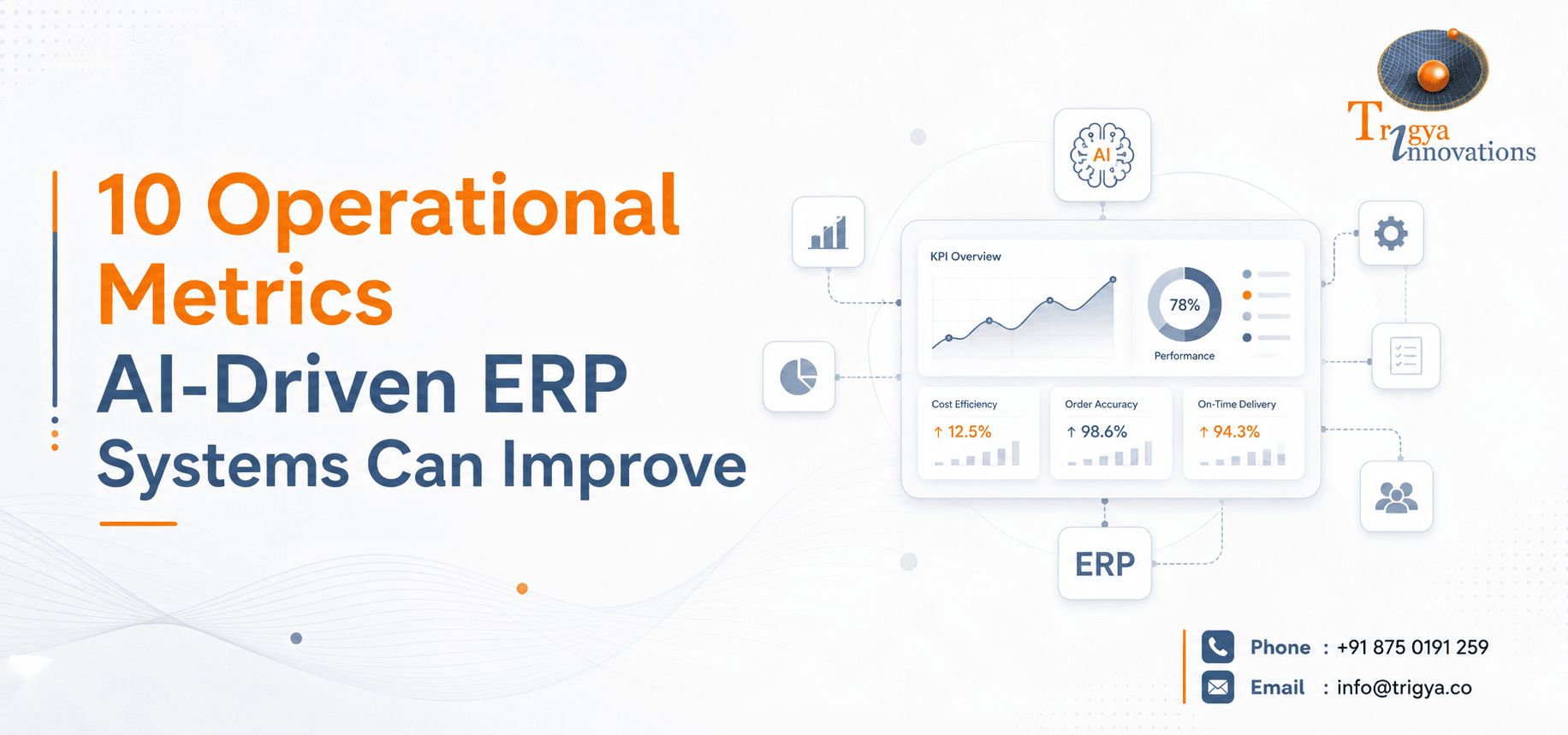
The ten key metrics are simple: forecast accuracy, inventory levels, order fill rate, production output, equipment downtime, defect rate, warehouse capacity, procurement spend, finance cycle time, and safety events.
1. Forecast Accuracy
Forecasting is the starting point. If demand forecasts are wrong, everything else suffers. Stock levels, purchasing, production, cash flow, and delivery dates all become harder to manage. AI-driven ERP systems can study past sales, seasonal trends, customer patterns, and supplier delays to give better demand predictions.
2. Inventory Levels
Too much inventory blocks cash. Too little inventory creates missed sales. AI can help teams decide what to reorder, when to reorder, and how much to keep. This is one of the clearest areas in 10 Operational Metrics AI-Driven ERP Systems Can Improve because inventory affects almost every department.
3. Order Fill Rate
Order fill rate shows how often customers receive the right products on time. AI-driven ERP systems can warn teams about likely stockouts, delayed supplier shipments, or warehouse shortages. This helps businesses act before the customer is disappointed.
4. Production Output
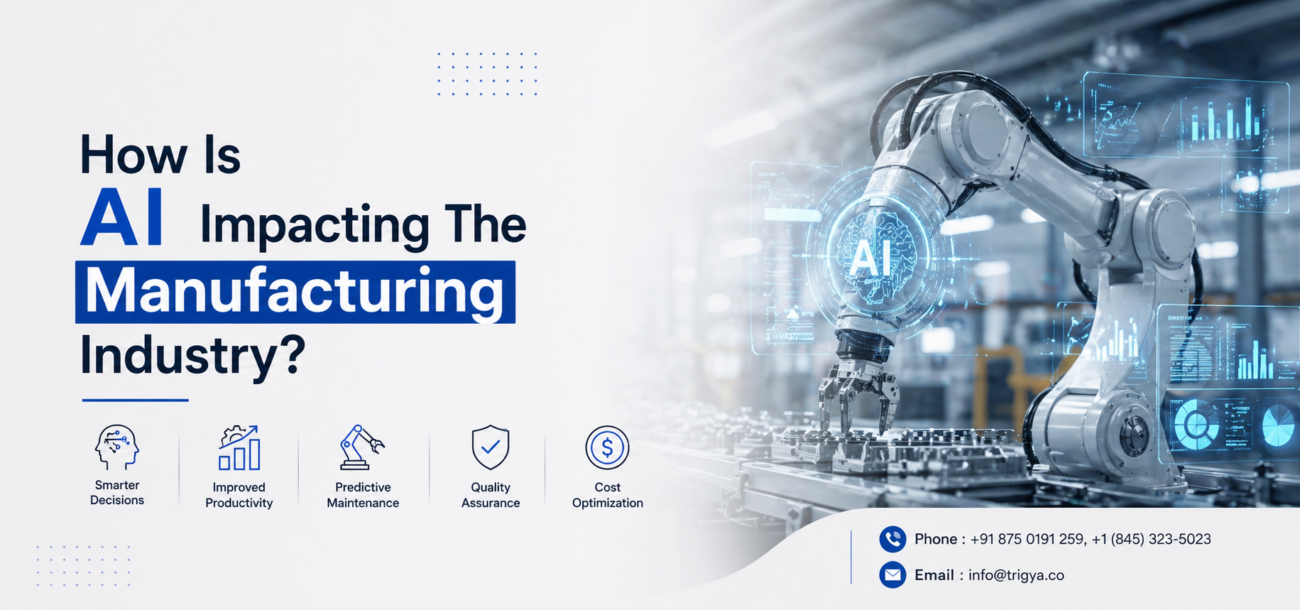
Production output measures how much work a plant or operation completes in a given time. AI can help by finding delays, machine bottlenecks, poor scheduling, or underused capacity. Deloitte found that manufacturers using smart manufacturing initiatives saw average production output improvements of 10% to 20%.
5. Equipment Downtime
Unplanned downtime is expensive. A machine that fails at the wrong time can stop production, delay orders, and increase repair costs. AI can study machine data, service records, temperature, vibration, and usage patterns to predict failure risk. PwC notes that AI-enabled predictive maintenance could reduce maintenance costs by up to 30% and unplanned downtime by 45%. (PwC)
This is also where Trigya Innovations, Zoho One Premium Partner, can support businesses that want practical AI adoption instead of disconnected tools.
6. Defect Rate
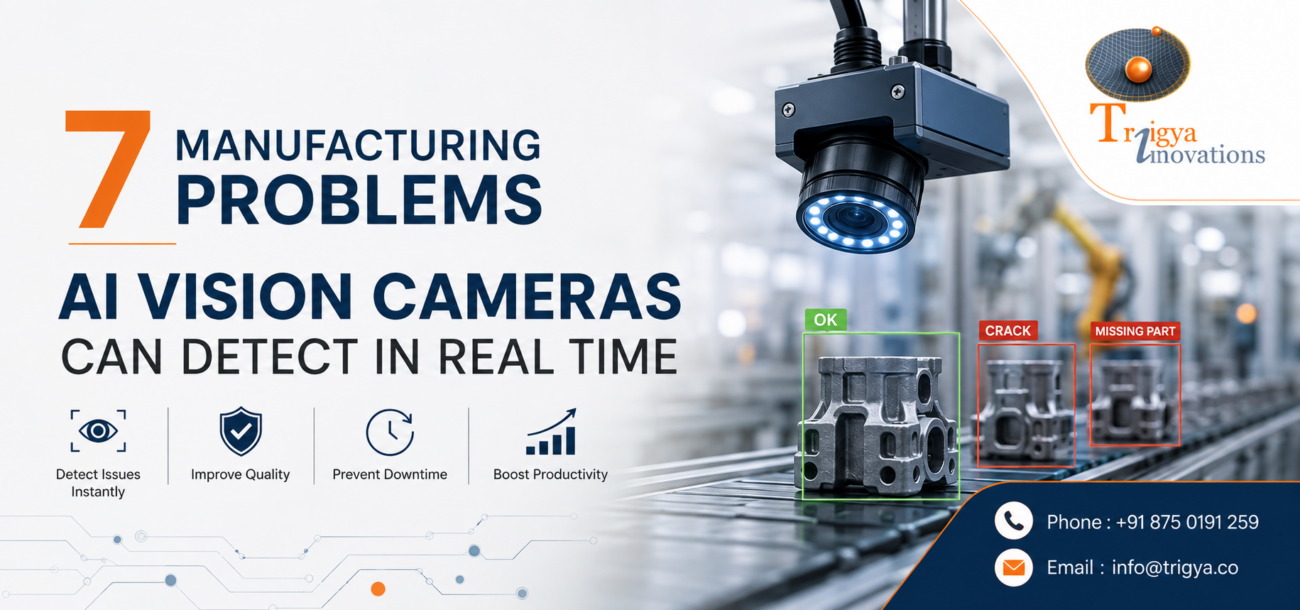
Defect rate shows how often products fail quality checks. AI-ML Vision cameras can inspect products, labels, parts, packaging, and assembly steps in real time. If the client already has cameras, those existing cameras can often be upgraded into AI vision cameras instead of replacing the full setup.
Ford has rolled out AI-powered camera systems to detect factory defects in real time, including millimeter-scale misalignments and wrong part installation. Business Insider reported that Ford uses these systems to help workers catch issues earlier, before they become rework, warranty claims, or recalls.
7. Warehouse Capacity
Warehouse capacity is not only about space. It is also about picking paths, storage layout, dock timing, staff planning, and forklift use. AI can help identify unused capacity and suggest better movement of goods. McKinsey reports that AI-powered warehouse tools can unlock 7% to 15% additional capacity in warehouse networks.
8. Procurement Spend
Procurement teams often lose money through poor supplier comparisons, late buying, duplicate orders, or weak approval control. AI-driven ERP systems can compare supplier prices, delivery performance, contract terms, and purchase history. This helps teams buy smarter without slowing down operations.
9. Finance Cycle Time
Finance teams spend too much time on manual checks, invoice matching, approvals, and month-end closing. AI can help classify invoices, detect duplicate payments, flag unusual expenses, and speed up approvals. The goal is not to remove financial control. The goal is to reduce repetitive work and show finance teams where attention is needed.
10. Safety and Compliance Events
AI vision cameras can also help detect safety issues such as missing PPE, blocked exits, restricted-zone entry, or unsafe movement around machines. This must be done carefully. AI systems that use cameras and employee-related data need clear rules, privacy controls, and governance. NIST’s AI Risk Management Framework is designed to help organizations manage AI risks to people, businesses, and society.
Conclusion
One way to get the best of AI-Driven ERP Systems is to start small. Pick two or three weak metrics. Set a clear baseline. Connect the right data. Then measure improvement.
AI-driven ERP works best when it is tied to real operations, not treated as a trend. With ERP, automation, analytics, and AI-ML Vision cameras working together, Trigya Innovations, Zoho One Premium Partner, can help businesses improve visibility, reduce waste, and make faster decisions without overcomplicating the system.