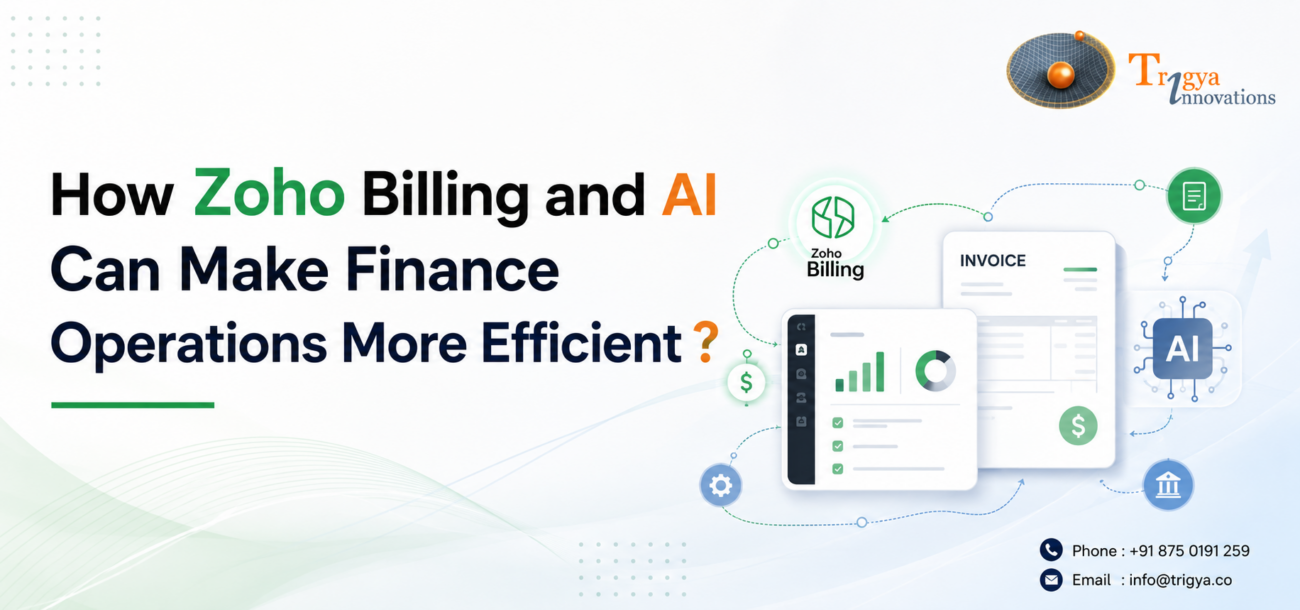


For years, “automating accounting” meant setting up rules: if this bank transaction matches that vendor, categorize it here. Useful, but rigid. Ask Zoho Books MCP a plain-language question instead, and it can create the invoice, chase the payment, or reconcile the transaction on the spot — no rule-builder required. That shift, from clicking through forms to simply describing what you want done, is what’s pulling finance teams toward this feature, and it’s worth understanding clearly before you hand your books over to an AI agent.
What Zoho Books MCP Actually Is
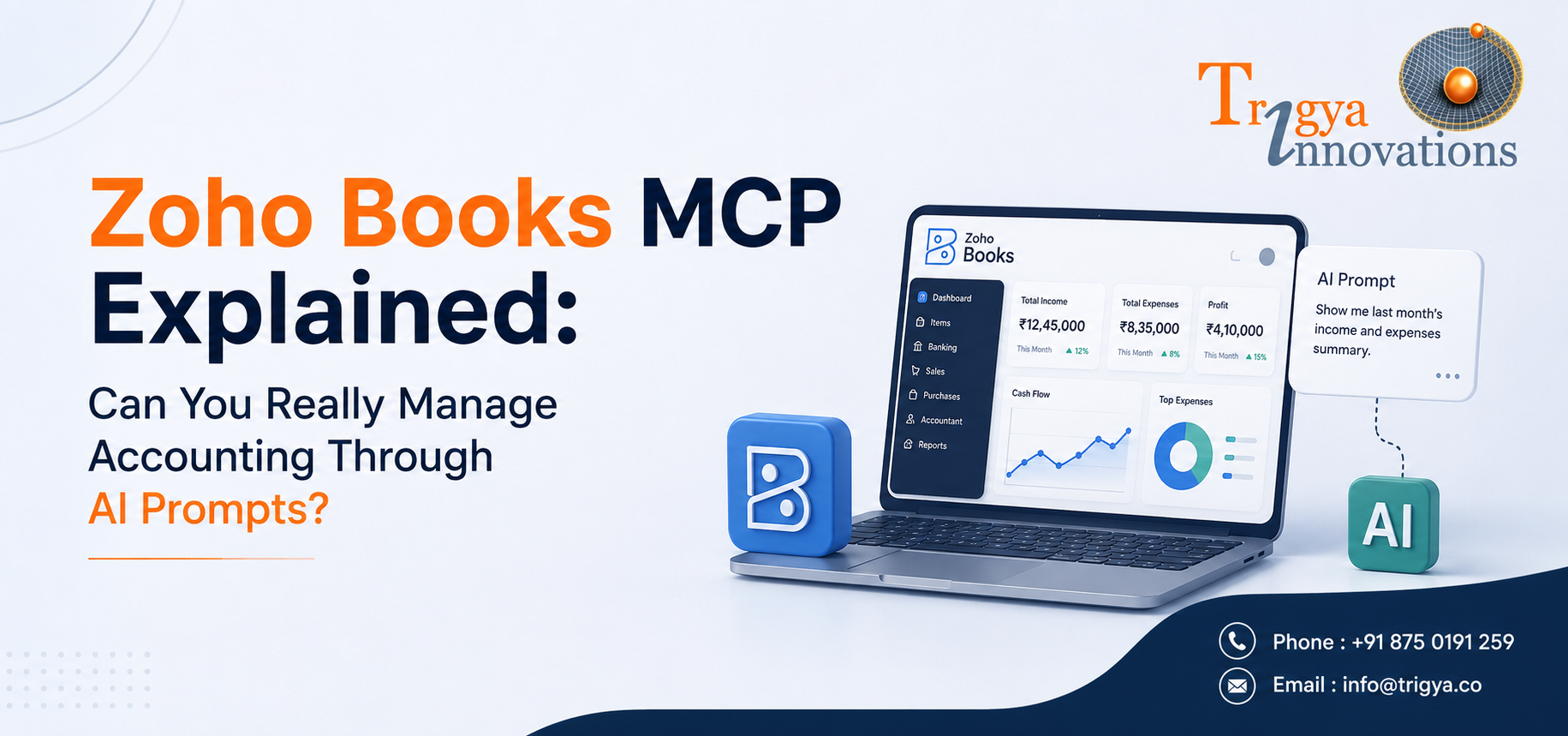
MCP stands for Model Context Protocol, an open standard that lets AI models like Claude or ChatGPT talk to external software in a structured way, rather than guessing at screenshots or scraping web pages. Zoho’s own explainer puts it simply: MCP acts as a middle layer so AI tools can access data and perform actions inside Zoho Books directly, whether that’s creating invoices, recording expenses, or reconciling bank statements, all from natural-language prompts. In practice, you type something like “reconcile the bank transaction of $1,500 received from XYZ Group,” and Zoho Books MCP maps that sentence to the correct API action, exactly the way Zoho’s own help documentation describes it.
This isn’t a Zoho-only idea, either. Anthropic released MCP as an open protocol, and adoption has been fast: SDK downloads reached roughly 97 million a month by March 2026, with more than 10,000 public MCP servers now indexed across major registries, a growth rate researchers clocked at 4,750% in sixteen months. Zoho Books MCP is simply the accounting-specific implementation of that same idea.
What You Can Actually Ask It to Do
The practical use cases fall into a handful of buckets. You can record finances directly through creating and sending invoices, logging expenses, reconciling transactions, with prompts as literal as “create an invoice for the customer ABC Corp for $5000“. You can chase receivables by asking the AI to track overdue invoices and send reminders automatically, which matters because unpaid invoices are a cash-flow problem every business recognizes, and this gives teams one more channel to stay on top of them beyond standard workflow automation (Zoho Blog). Month-end work benefits too: one integration guide walks through an agent instruction to reconcile every payment received against its invoice and flag mismatches or duplicates in a single pass (CodroidIT Labs). Third-party connectors extend this further, listing capabilities like customer and vendor record management, bank reconciliation, and pulling real-time profit-and-loss reports through the same conversational interface (Composio).
Where the Caution Comes In
None of this means accounting on autopilot is risk-free, and this is where the “no advice without research” bar really matters. MCP’s growth has outpaced its security maturity. A 2026 supply-chain analysis found that over 30% of more than 1,800 deployed MCP servers carried at least one exploitable vulnerability, a higher base rate than most enterprise software categories at similar scale. Microsoft’s security team has separately warned that as AI tools move from reading data to acting on it, a prompt injection attack stops being a bad output and starts being an unauthorized action — a meaningfully different risk profile for anything connected to your books (Microsoft Security Blog). Practically, that means scoping permissions tightly, reviewing which MCP server you’re actually connecting to (official Zoho endpoints versus third-party ones), and keeping a human in the loop for anything that moves money, at least until the tooling matures further.
This is exactly the kind of setup work that trips up businesses trying to do it alone — matching the right MCP configuration to your existing Zoho stack, scoping access correctly, and training the team on which prompts are safe to run unsupervised. As a Zoho One Premium Partner, Trigya Innovations helps businesses configure Zoho Books MCP correctly from day one rather than bolting AI access on top of an already-messy chart of accounts.
So, Can You Really Manage Accounting Through AI Prompts?
Partially, and that’s the honest answer. Zoho Books MCP genuinely replaces a lot of repetitive form-filling such as invoicing, categorizing, reconciling, reporting, with a single sentence. What it doesn’t yet replace is judgment: knowing when a reconciliation mismatch signals a real problem, or when an AI-suggested action needs a second look before it touches your ledger. Treat it as a very capable assistant, not an autonomous accountant, and it earns its place in your stack.
If you’re evaluating whether Zoho Books MCP fits your workflow, or want a properly scoped rollout instead of a risky one, Trigya Innovations can help you set it up right the first time — reach out to get started.